
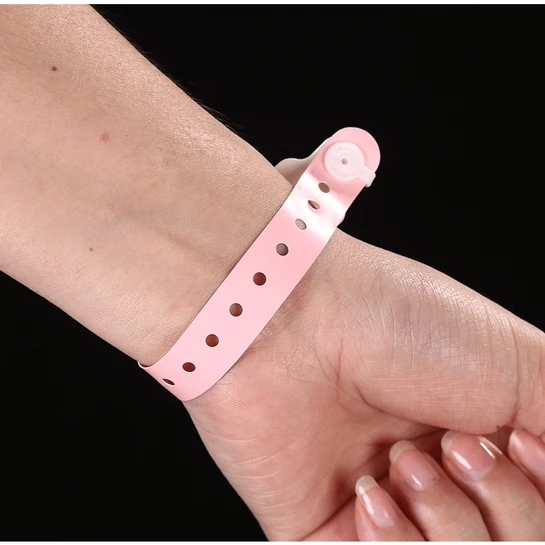
U.S. hospitals are exploring practical ways to reduce administrative work and improve clinical efficiency. One emerging approach is automated patient wristband technology, which combines disposable wristbands with sensing systems to capture information about interactions between patients and healthcare staff.
In 2026, Cognosos introduced a new staff‑patient encounter‑sensing solution designed to support clinical documentation and workflow automation. The technology was presented in connection with HIMSS26 in Las Vegas.
How Automated Patient Wristbands Work
Traditional patient wristbands are primarily used for identification. Newer wristband technologies add another layer of functionality by working with wearable staff tags and proximity‑sensing systems.
According to Cognosos, its healthcare solution uses disposable patient wristbands together with staff tags to detect proximity and interactions between healthcare workers and patients. The system is designed to capture encounter data and provide hospitals with additional insight into clinical workflows.
This type of technology may help healthcare organizations better understand workflow patterns and reduce certain repetitive documentation activities.
Why Clinical Documentation Matters
Administrative workload remains a major challenge for healthcare organizations. The U.S. Surgeon General’s Advisory on health worker well‑being reported that nurses spend up to 41% of their time on electronic health records and documentation.
Technologies that reduce repetitive administrative tasks may help staff spend more time on direct patient care and other clinical responsibilities. This is one reason workflow automation and connected healthcare solutions are receiving increasing attention.
Disposable Wristbands and Hospital Deployment
From a medical supply perspective, disposable wristbands offer practical advantages in clinical environments. Unlike reusable electronic devices, disposable wristbands are intended for individual patient use and can be replaced as part of normal patient turnover.
Cognosos describes its encounter‑sensing technology as an infrastructure‑light approach that uses disposable wristbands and sensing tags rather than relying entirely on traditional fixed RTLS systems.
For hospitals evaluating this type of technology, important considerations may include:
- Disposable vs. reusable design
- Ease of deployment
- Compatibility with existing systems
- Data privacy and security requirements
- Product cost and total cost of ownership
- Impact on clinical workflows
- Staff training and implementation needs
What This Means for Medical Supply Buyers
The development of automated patient wristbands reflects a broader trend in healthcare: traditional medical supplies are increasingly being connected with digital technologies.
For procurement teams, evaluating a hospital product may involve more than its physical specifications. Buyers may also consider how a product fits into the hospital’s broader technology and workflow environment.
Disposable wristbands, identification products, staff tags, and other connected supplies may become part of more integrated hospital workflows as organizations adopt automation technologies.
Looking Ahead
Automated patient wristbands are still an emerging area of healthcare technology. Their potential value lies not simply in replacing traditional identification wristbands, but in adding new ways to capture workflow information and support clinical documentation.
As hospitals continue seeking practical ways to reduce administrative workload, connected medical supplies may play an increasingly important role in healthcare operations.
Conclusion
Automated patient wristbands represent an intersection between traditional hospital supplies and digital healthcare technology. By combining disposable wristbands with encounter‑sensing capabilities, these solutions may help hospitals capture workflow information and support more efficient clinical documentation.
As healthcare automation continues to evolve, hospitals and medical supply buyers will likely pay closer attention not only to product specifications, but also to deployment requirements, compatibility, data needs, and overall workflow impact.